
Defender 110 & 130
Validation & testing: road, reliability and robustness
Tested for road, reliability and robustness. As JLR “Accredited Converter”, TRASCO validates the Defender A-KIP® like a series vehicle.
- Independent partner
- ATP Automotive Testing Papenburg – one of the largest manufacturer-independent proving grounds in the world.
- Program
- 13 proving-ground disciplines – chassis, dynamics, endurance and climate.
- Standard
- Validated like a series development – plus ballistic certification and physical crash tests.
Since 1948 Land Rover has been manufacturing authentic 4x4s that represent true ‘breadth of capability’ across the model range. Defender is tough, capable, and unstoppable.
This iconic 4x4 represents decades of innovation and improvement, so it is indeed a great honor and privilege for TRASCO to be awarded the status of “Accredited Converter” – and to ensure you enjoy all the features and benefits for many years, extensive reliability, robustness and durability testing has been performed by TRASCO Engineers in conjunction with an independent automotive institution.
Why it matters
A protected vehicle must re-earn every test.
A-KIP® adds ballistic mass and heavier components while maintaining the factory chassis, brakes and gross vehicle weight rating (GVWR). Each part of the program validates one of those engineering decisions.
Added mass braking & dynamics
Remaining within the original gross vehicle weight rating (GVWR) preserves the OEM braking and suspension systems without modification. The braking and vehicle dynamics program provides the validation data and results demonstrating that these systems remain adequate under the intended operating conditions.
Heavier doors hinges & latches
Doors with ballistic materials load hinges and latches far beyond series duty. Endurance cycling in Bremen validates both.
Heavier glass window lifters
Ballistic door glass weighs several times more than standard OEM glass. Heavy-duty window lifters are therefore subjected to endurance testing to verify their durability. Window operation ensures the glass can still be lowered sufficiently for document exchange.
Extreme climate ballistic laminate
From deep frost to desert heat: multi-layer glass and composites are cycled through extreme temperatures – including regulated de-misting and de-icing through the thicker glass.
Independent testing
Thirteen disciplines on the proving ground.
Chassis, dynamics, endurance and climate – the program of a series development, applied to the protected vehicle.
Independent testing program – open a discipline to see what it validates
Road & endurance
Banked road & rough road
Sustained lateral load on the banking, followed by pavé, potholes and broken surfaces – compressing years of road wear into a short, punishing program.
What this proves Confirms that ballistic mass stays exactly where it was engineered to be: mounts, seals and interior trim remain tight and quiet.
Twist road & durability road
Alternating surface twist flexes the body structure diagonally; the durability road adds endless repeated impacts.
What this proves The body accepts chassis flex without new stress points – essential when doors and glass are several times heavier than series parts.
City road
Stop-and-go, kerbs, speed bumps and parking maneuvers – the unglamorous everyday profile.
What this proves A-KIP® vehicles live in cities. The test validates daily usability, from low-speed ride comfort to maneuvering.
Hill sections
Defined gradients for pull-away, braking and holding tests.
What this proves Hill starts with a protected payload validate driveline, parking brake and hold functions.
Dynamics & handling
Vehicle dynamics test
Objective handling measurements on the dynamics pad – steering response, load-change behavior, stability systems.
What this proves The core promise, measured: within the original GVWR, the Defender keeps its factory driving character.
Wet handling track
Handling at the limit on irrigated, low-grip surfaces.
What this proves Stability control and braking must perform with the protection package on the worst surface – validated wet, not just dry.
Maneuvering tests
Evasive lane changes and tight maneuvers at increasing speed.
What this proves In an incident, the escape is part of the protection. The vehicle must react like a series Defender – instantly and predictably.
Cornering high & low speed
Steady-state and transient cornering across the speed range.
What this proves Confirms balance and body control with the protection package installed – no surprises at either end of the envelope.
Braking tests
Repeated full braking to a standstill, measured – cold and hot.
What this proves A-KIP® keeps the factory brakes because it keeps the factory GVWR. The braking program is where that decision proves itself.
Slalom
Rapid left-right transitions through cones at defined spacing.
What this proves The fastest way to expose added inertia. The protected Defender threads it with factory composure.
Climate & comfort
Acoustic track
Defined surfaces for interior and exterior noise assessment.
What this proves Ballistic glass and steel change acoustics. The test confirms the cabin stays as quiet as the factory intended – discretion includes sound.
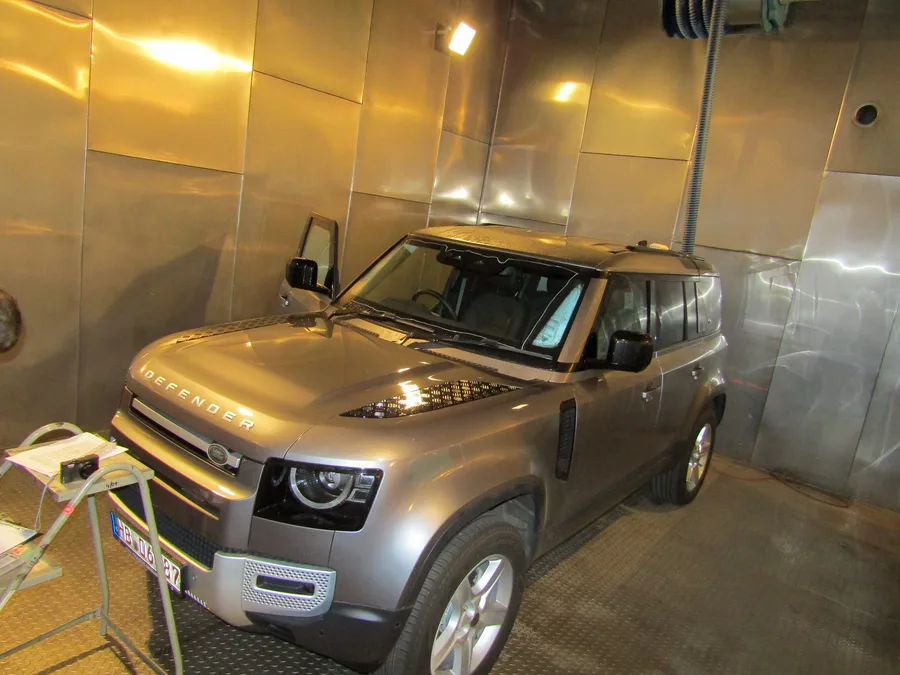
Climate chamber
Extreme heat and deep frost cycles in a controlled chamber.
What this proves Multi-layer ballistic glass and composite materials must shrug off temperature extremes – no delamination, no distortion.
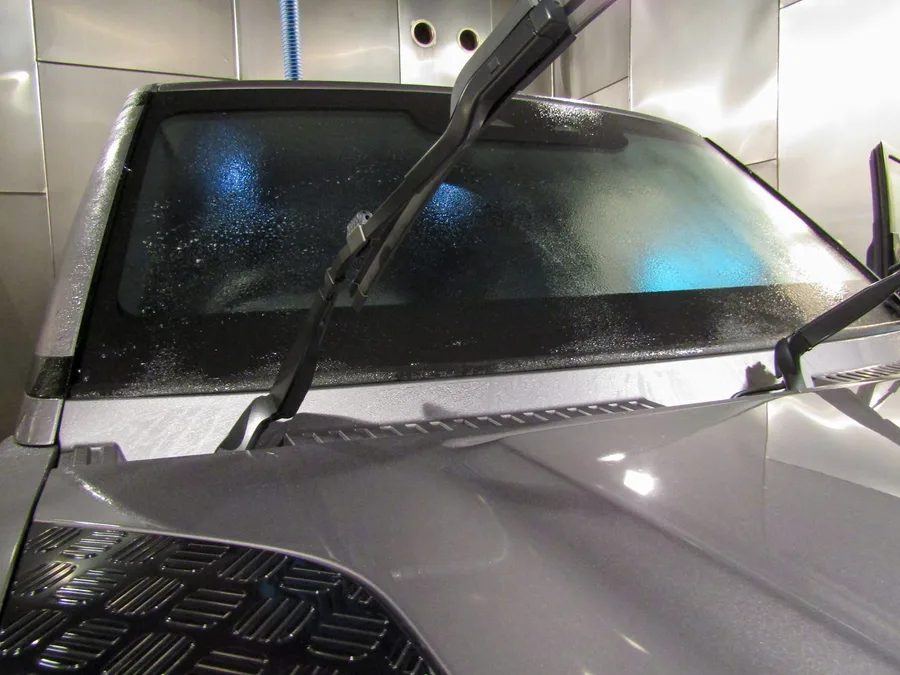
De-misting & de-icing
Regulated windshield clearing cycles – visibility restored within defined limits.
What this proves Ballistic glass is far thicker than series glass. The test proves heating and airflow still clear it as required.
Performed at ATP Automotive Testing Papenburg – independent proving ground
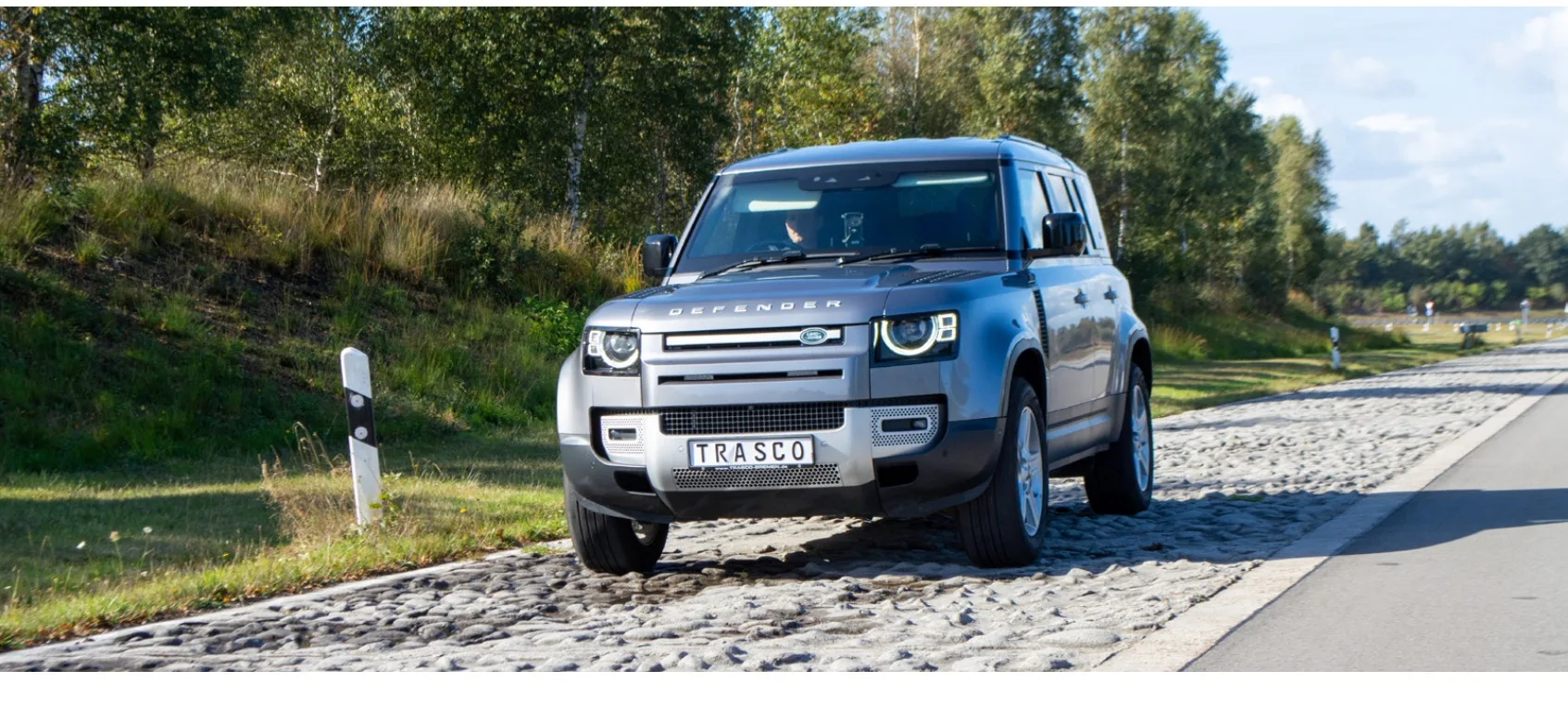
Seen on the proving ground
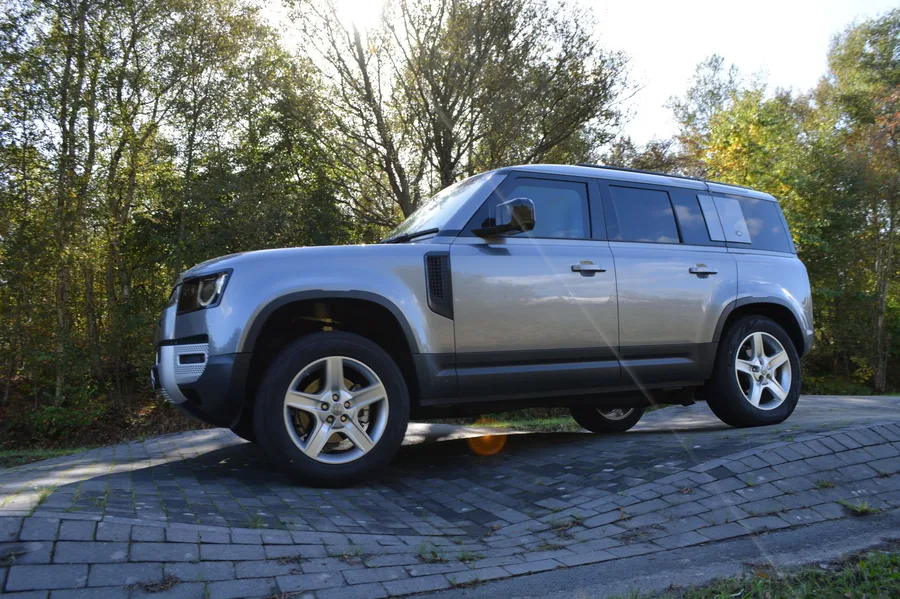
Not staged. Tested.
Field-tested by professionals
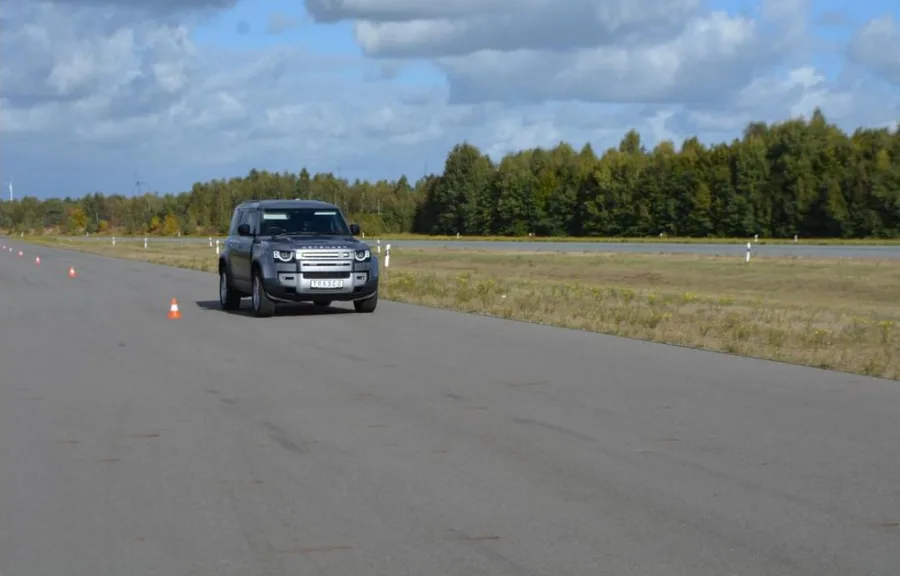
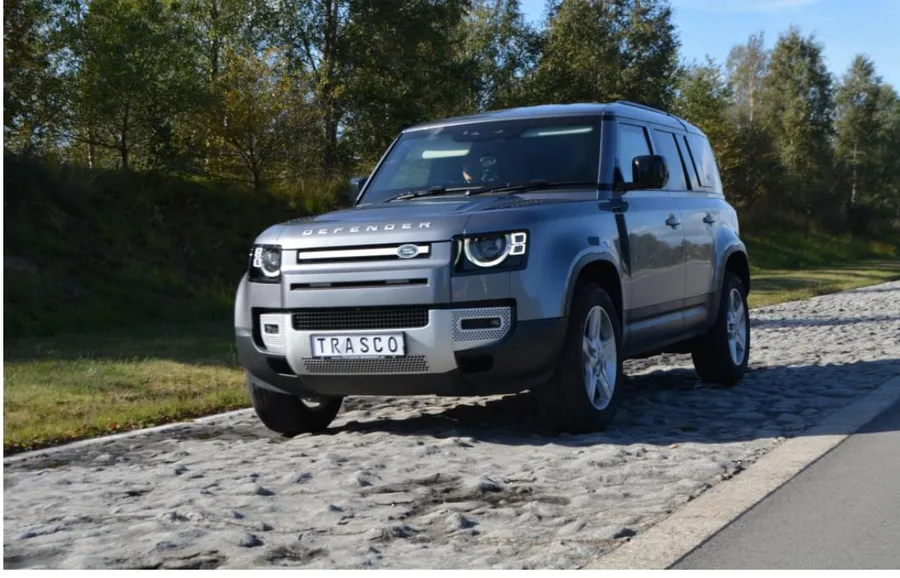
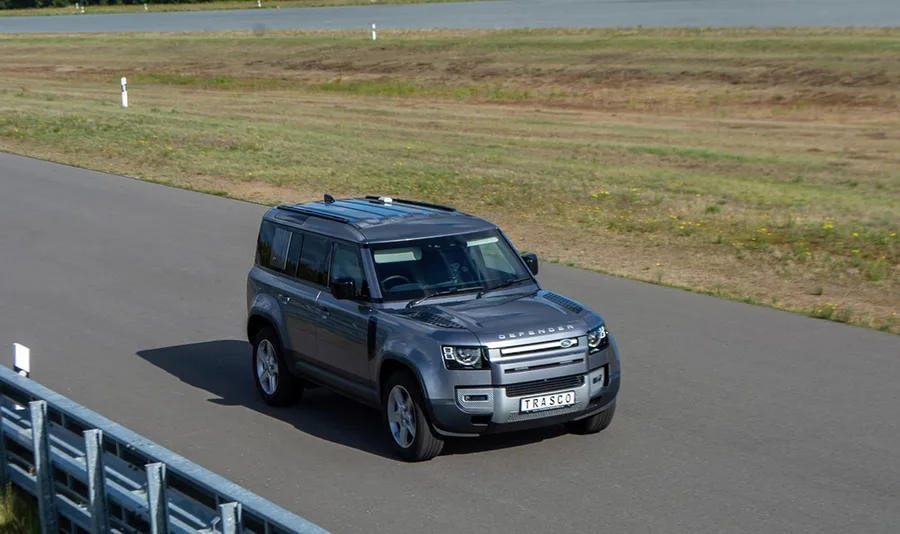
One day at the DEKRA Lausitzring.
In 2025, specialists of a German state authority – experts in armored civilian vehicles and special protection – put the Defender A-KIP® through a full day of on- and off-road evaluation at the DEKRA Lausitzring.
Two vehicles faced the program: a VPAM 6 Defender 110 with the 240 hp diesel drivetrain, and the 525 hp 5.0 V8 variant.
The feedback was overwhelmingly positive – with special recognition for the vehicle dynamics, which remained largely unchanged despite the added protection.
Read the full report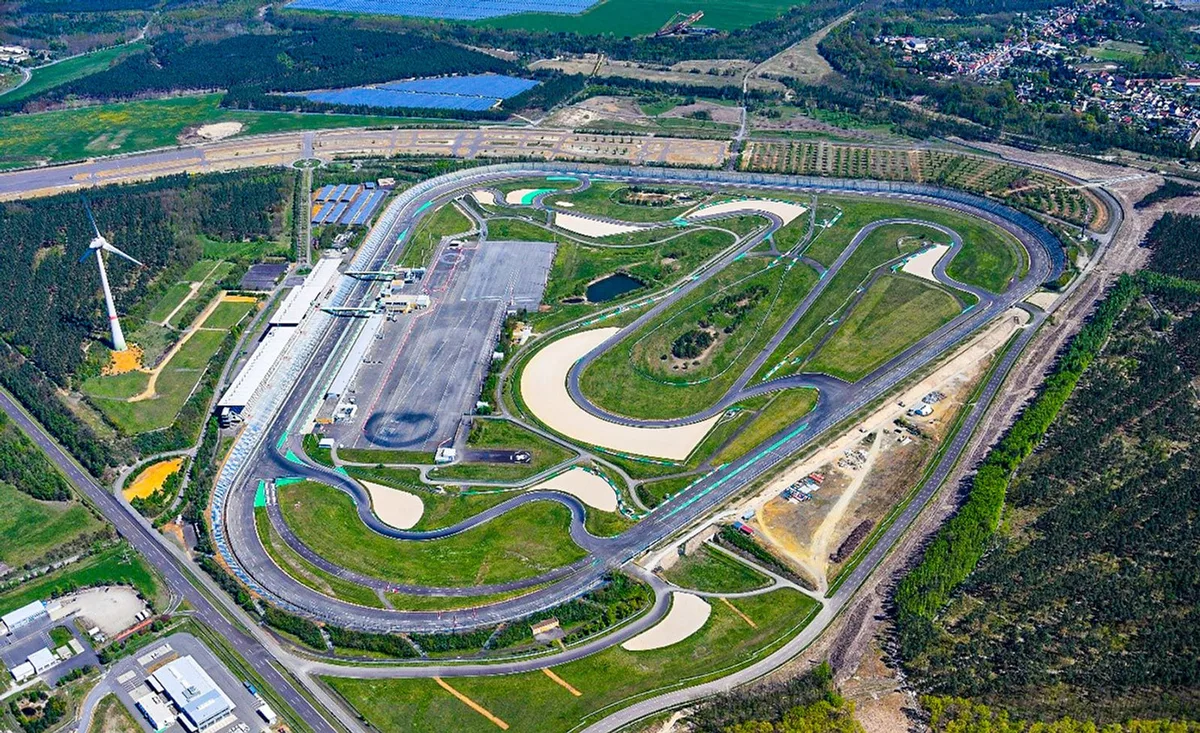
The proving ground
Tested where the industry tests: ATP Papenburg.
The 13-discipline program is performed in conjunction with ATP Automotive Testing Papenburg – one of the largest manufacturer-independent automotive proving grounds in the world: 780 hectares, 75 kilometers of established roadway, in operation since 1998.
From the high-speed oval and vehicle dynamics area to rough road, hill sections and wet handling: the modules every A-KIP® configuration completes are permanent industry-grade installations, used daily by vehicle manufacturers.
780 ha secured grounds · 75 km of test roadway · 14 dedicated track modules, from banked oval to twist road.
atp-papenburg.de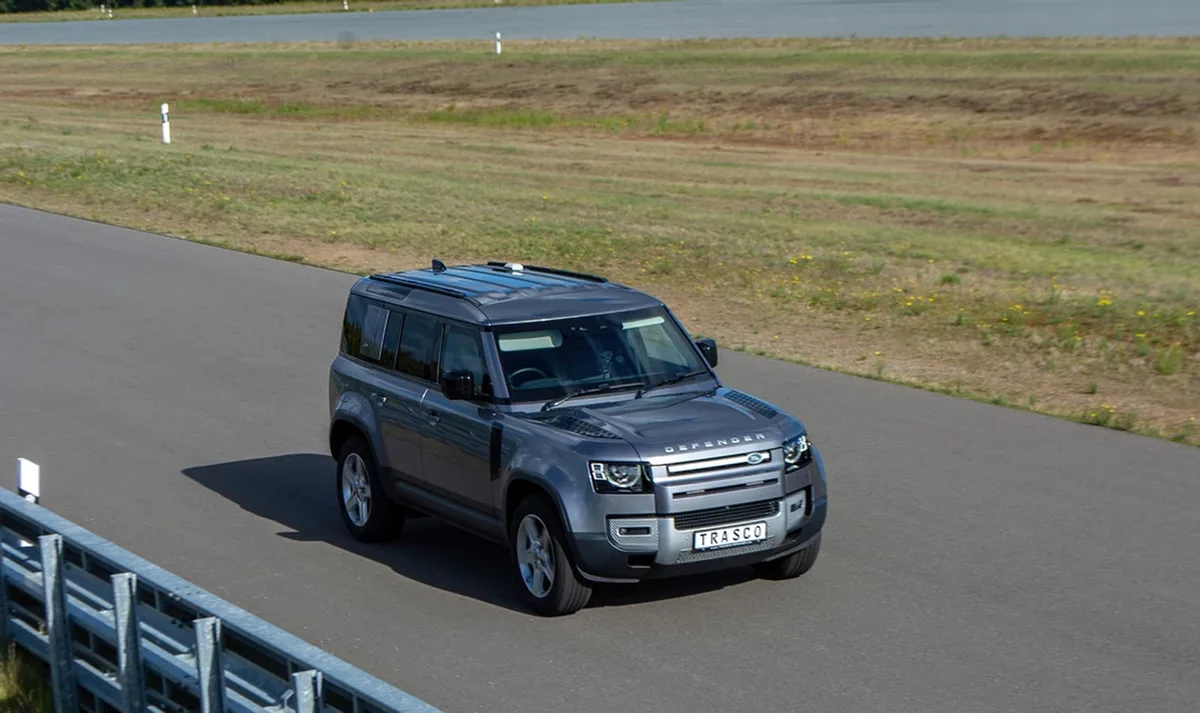
Ballistic tests & certification
Every component certified – individually.
All protection components installed in the vehicle are generally tested and certified by a German government-approved VPAM-PM test laboratory according to VPAM-PM 2007.
VPAM test matrix & certification- Ballistic glass
- Test report & certification
- Ballistic steel
- Test report & certification
- Ballistic composites
- Test report & certification
- Blast fragmentation blanket
- Test report & certification
- Self-sealing fuel tank
- Test report & certification
Crash testing
Full airbag suite. Deployed as designed.
In the event of a collision, it is crucial that the vehicle core safety systems function correctly and have not been compromised by ballistic material integration. Some armored vehicle solutions sacrifice this important aspect and deactivate some of the airbags or safety features. This however is not the case with Defender A-KIP® – the vehicle retains its full suite of airbags and safety features.
A series of tests have been conducted on the Defender A-KIP® to ensure there are no conflicts or compromise of the passive safety systems, including vehicle physical crash testing that simulates a side pole crash and a side impact from another vehicle. These tests demonstrate that the airbag system deployed as designed.
- Static test: cantrail airbag deployment
- Physical test: side impact, lateral pole
- Physical test: European legal side impact
What this means for your fleet.
A protected vehicle that passes a series-development program stays a series vehicle in daily life: serviced through the JLR network and TRASCO’s worldwide service structure, covered by warranty, and predictable to operate.